
Published by: Balaji Construction Company. This article provides general guidance, not a project-specific engineering or cost review. Construction costs, regulations and product specifications can change.
Receiving the keys to your new home is a significant milestone, but it is also the moment when your responsibility shifts from planning to verification. Many homeowners in Jaipur face the challenge of determining whether the work completed by their contractor meets the agreed standards. Understanding how to check construction quality of a built house is essential to avoid costly repairs later. This guide provides a phase-by-phase approach to inspecting your home, focusing on structural soundness, waterproofing, and finishing details that are critical for long-term durability.
Structural and Foundation Checks: What to Look For
Before focusing on aesthetics, you must verify the structural integrity of the building. In Jaipur, where soil conditions can vary significantly across different neighborhoods, foundation stability is paramount. You do not need to be an engineer to spot major red flags, but you should look for specific visual indicators.
- Crack Patterns: Inspect walls, ceilings, and floors for cracks. Hairline cracks in plaster are common due to drying shrinkage, but diagonal cracks or cracks that appear wide or deep may indicate structural movement. Pay close attention to corners of windows and doors, as well as the junctions between walls and ceilings.
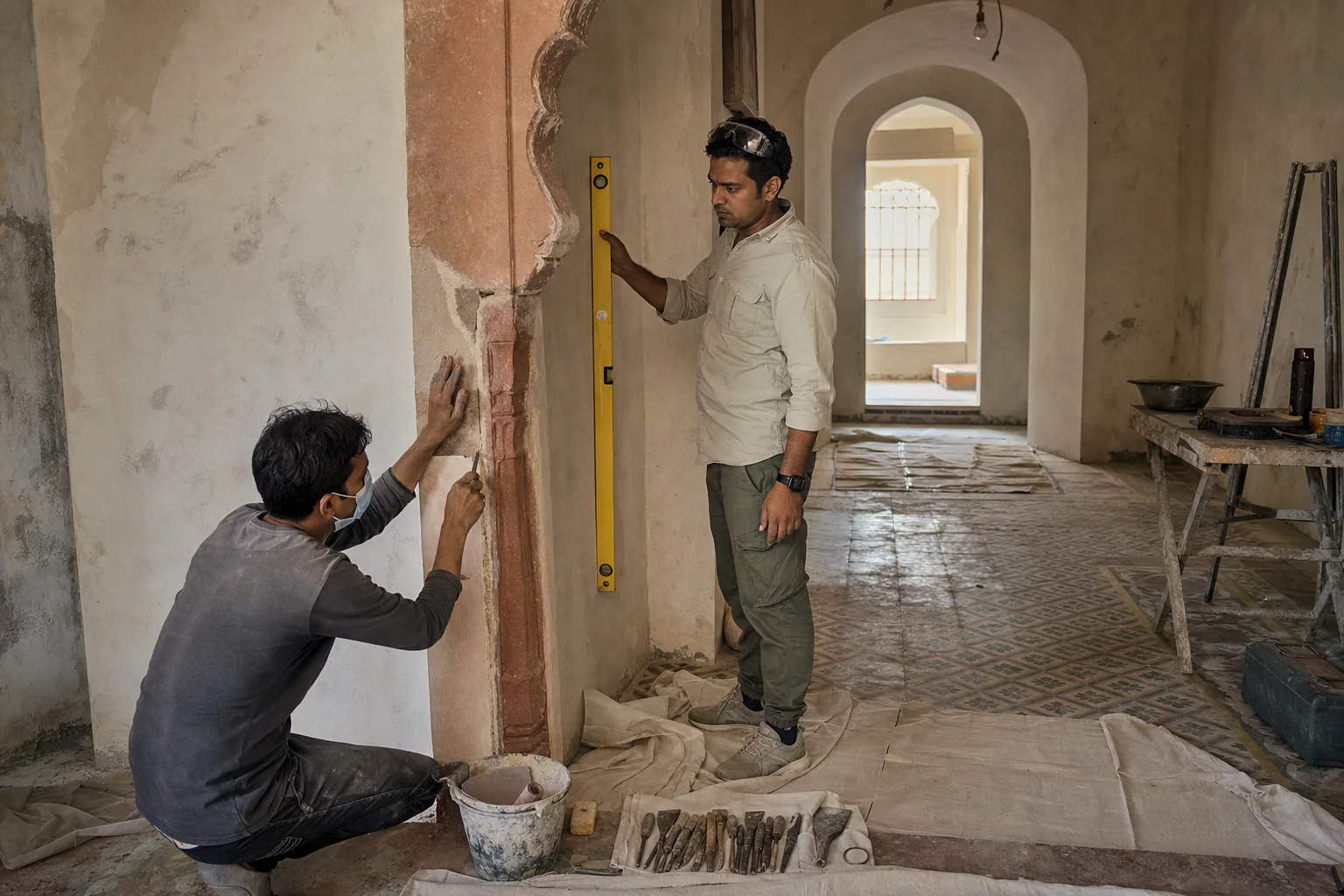
- Levelness: Use a simple water level or a long straight edge to check if floors and sills are level. Uneven floors can lead to water pooling and difficulty in laying flooring materials.
- Column and Beam Alignment: Visually check if columns and beams are straight. Any noticeable bowing or deviation should be reported immediately.
- Foundation Exposure: If the foundation is visible, check for signs of erosion or water accumulation around the base of the building. Proper drainage away from the foundation is critical in Jaipur’s climate.
If you notice significant structural anomalies, do not proceed with finishing work. Request a detailed report from your contractor or consider hiring a third-party structural engineer for an independent assessment. For a broader understanding of the construction phases, you may refer to our Turnkey Home Construction Process in Jaipur: A Step-by-Step Guide to see where structural checks fit into the overall timeline.
Waterproofing and Plumbing Inspections: Preventing Future Leaks
Water damage is one of the most common and expensive issues in new homes. In Jaipur, while rainfall is seasonal, the intensity of monsoon showers and the use of bore wells for water supply make waterproofing and plumbing integrity critical. A thorough inspection of these systems can prevent dampness, mold, and structural corrosion.
Roof and Terrace Waterproofing
Jaipur homes often feature terraces that are exposed to direct sunlight and rain. Check the following:
- Water Test: If possible, request a water test on the terrace. Fill the area with water for a specified duration and check the ceiling below for any seepage or damp patches.
- Slope and Drainage: Ensure the terrace has a proper slope towards the drainage points. Stagnant water is a primary cause of waterproofing failure.
- Material Integrity: Look for tears, bubbles, or peeling in the waterproofing membrane. If a bituminous coating is used, check for uniformity and thickness.
Plumbing and Bathroom Checks
Plumbing leaks often manifest as dampness in adjacent rooms or ceilings below. To inspect:
- Pressure Test: Ask the contractor to perform a pressure test on all water supply lines. This ensures there are no hidden leaks in the pipes embedded in the walls.
- Drainage Flow: Pour water into all drains, including floor drains, shower drains, and sink drains. The water should flow away quickly without backing up or creating odors.
- Wall Dampness: Check the walls behind bathrooms and kitchens for any signs of dampness or discoloration. This can indicate a leak in the concealed plumbing.
Proper planning for water management is crucial. You might also find our guide on Rainwater Harvesting Planning for Jaipur Homes useful for understanding how water management integrates with your home’s structure.
Finishing Quality: Plastering, Painting, and Flooring
Finishing work is the most visible aspect of your home, but it also serves a protective function. Poor finishing can lead to premature wear and difficulty in maintenance. Here is what to check:
Plastering
- Surface Smoothness: Run your hand over the walls. The surface should be smooth without lumps or rough patches. Use a straight edge to check for flatness; any noticeable deviation should be flagged for correction.
- Cracks and Holes: Look for cracks, holes, or voids in the plaster. Tap the walls with a small hammer; a hollow sound indicates voids, which can lead to plaster detachment.
- Corner Sharpness: Internal and external corners should be sharp and straight. Blunt or uneven corners are a sign of poor workmanship.
Painting
- Uniformity: Check for uniform color and texture. Look for brush marks, roller marks, or drips.
- Adhesion: Gently rub the painted surface with a damp cloth. If paint comes off, the primer or base coat was not applied correctly.
- Moisture Resistance: In bathrooms and kitchens, ensure that the paint is suitable for damp areas. Standard emulsion paint should not be used in these zones.
Flooring
- Levelness: Use a long straight edge to check the levelness of the floor. Uneven floors can cause issues with furniture placement and flooring installation.
- Cracks and Chips: Inspect tiles or stone slabs for cracks, chips, or voids. Tap each tile; a hollow sound indicates poor adhesion.
- Grout Lines: Check that grout lines are uniform and filled completely. Uneven grout can trap dirt and moisture.
For those interested in how design choices impact finishing, our Home Design Review Checklist Before Construction offers insights into aligning design with practical execution.
Electrical and Safety Compliance: Ensuring Code-Adherent Work
Electrical work is often concealed, making it difficult to inspect after completion. However, safety and functionality must be verified before handover.
- Socket and Switch Functionality: Test every socket and switch. Ensure that they are firmly mounted and that the wiring is secure.
- Earthing: Request a test for the earthing system. Proper earthing is critical for safety, especially in areas with high lightning activity.
- Panel Board: Check the main electrical panel. Ensure that all circuits are labeled, breakers are functioning, and there is no overheating or burnt smell.
- Wiring Quality: If any wiring is exposed, check for proper insulation and secure connections. Avoid using temporary or exposed wiring in finished areas.
Electrical safety is non-negotiable. If you have concerns about the electrical setup, consider hiring a licensed electrician for a thorough inspection. This step is part of a broader Residential Contractor Due Diligence Checklist for Jaipur Homes to ensure your contractor adheres to safety standards.
Final Walkthrough: A Step-by-Step Checklist for Homeowners
Before final handover, conduct a systematic walkthrough of your home. Use the following checklist to document any defects. Take photos and videos of any issues and share them with your contractor in writing.
- Exterior Inspection: Check the facade, windows, doors, and drainage systems. Look for cracks, leaks, and proper alignment.
- Structural Check: Inspect walls, ceilings, and floors for cracks, levelness, and alignment.
- Waterproofing Test: Verify that the terrace and bathrooms have been tested for leaks. Check for dampness in adjacent areas.
- Plumbing Check: Test all water supply lines and drains. Ensure there are no leaks or blockages.
- Electrical Check: Test all sockets, switches, and the main panel. Verify earthing and circuit labeling.
- Finishing Check: Inspect plastering, painting, and flooring for defects. Check for smoothness, uniformity, and adhesion.
- Doors and Windows: Ensure all doors and windows open and close smoothly. Check for proper sealing and alignment.
- Documentation: Collect all necessary documents, including completion certificates, warranty cards, and as-built drawings.
Do not sign the handover document until all critical defects are resolved. Minor cosmetic issues can be addressed later, but structural and waterproofing defects must be fixed before you move in. If you are still in the planning phase, understanding the House Construction Cost in Jaipur can help you budget for potential rectification work.
By following this guide, you can ensure that your new home meets the expected standards of quality and safety. Balaji Construction Company serves home-construction clients in Jaipur, offering home construction, 2D and 3D design, and VR walkthrough planning. For project-specific prices, timelines, approvals, and specifications, a direct assessment is required. Contact us for a detailed consultation on your home construction project.